I Have a Complaint!

Woman and Love

Woman and Love

I have a complaint, to whom shall I voice my troubles? Sometimes I feel like I am trapped in a snare. Shall I tell the water, shall I speak to the stars, shall I pour my heart out to songs… I don't feel bad, they make me feel bad. The harshness and strangeness of people, of those close to me, worries me.

Could it be that I cannot grow up?

Why did we become like this and when? We turned selfish at great speed… We preferred to be frightened of everything, we hid in daylight. Without giving the other person a chance, we learned to blame them.

Why do we fight before we can even speak, who taught us these things? When I question, I also judge myself, but alas, this too has become a fashion we seem to need to follow. From the smallest to the greatest, looking at each other, murmuring to each other, we live with a kind of nonchalance, a discontent. As if we were the best, the most perfect, the most right... We cannot say stop to any negativity. Because it's herd psychology; wherever some go, those behind follow. Must we? Never... Yet shouldn't we be like the colors and plants of a garden, reflecting different beauties?

Everyone resembles each other so much. What happened to being different? Is it a rush, always not being able to catch up with things, complaints, dissatisfactions, the mentality of "it's fine without it, never mind" that is making us passive? What happened to tolerance, loyalty, memories, promises, loves, sacrifices? What happened to us? No answer... Is there none? Or can we not answer?

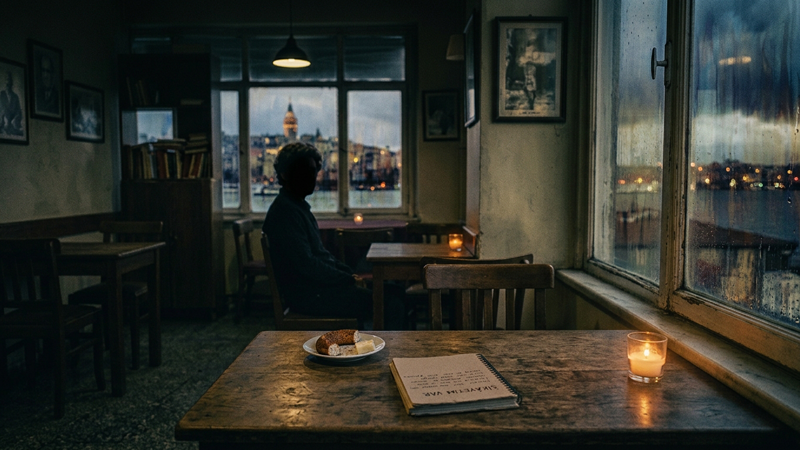
Is it that hard to share a glass of tea, a simit, a morsel of cheese? Can we not realize that distancing from people brings unhappiness? In words, it's fine... "Sharing multiplies", "I'm with you whenever you want", "We need to talk"... Then why don't you share? Why can't we talk? I call this empty talk.

We should host people… Treat them well… Share joys and troubles and get to know them. Nothing we cannot share has value. The miracle is to be able to become "we", not "I". Living is very precious. So much so that we cannot leave it to fate with lovelessness and irresponsibility...

I have thrown some of my friends with whom I walked hand in hand off a cliff. Well, they deserved it. And then I did not pull them out of the place they fell. They are still there and content with their lives, as far as I am concerned. Because they did not change, they could not change. For they live for themselves. I am on the side of honesty. I think I should mature and calm my heart. Sometimes I get sad and grumble; if my heart is broken, I can repair it myself. In fact, as life tests it, the heart will also quiet down and consent to some things. But I am not talking about resignation. Why should I surrender when I can be myself? Why should I become ordinary when I can be different?

While enjoying the pleasure of being together and sharing, I know that happiness will be with me.

This thought, while delighting me, also differentiates me. I read, listen, try to understand. I am still searching for ways to mature. Do you know how many ways there are to try to find? Oh, how much I complained, didn't I? Sometimes unhappiness envelops me. But may you be exiled to beauties, goodness, and happiness, okay?..

Comments (0)

La Cumparsita

Memorable Experiences

Tangos

It was a June day that scorched everything around. It had been 6 months since the divorce was finalized. I was exhausted from what I had been through and from dealing with the remaining rough edges.

On Saturday, I was going back and forth to run errands. I don't know when the light turned red or when I hit the brake. All I know is that waves of anger rising from my heart and hitting my brain had taken over my entire body. Even with my seatbelt fastened, I was so angry that I could have flown out the windshield as if struck by a tsunami.

My friend on the phone, with her calm voice flowing like honey, was saying to me, "You've been through a lot, maybe therapy would help." When I lifted my eyes from my hands gripping the steering wheel like vices, with white knuckles, and met my face in the mirror, I said, "My friend is right, I need to calm down a bit."

When my gaze fixed again on the light that wouldn't turn green, I saw the huge writing on the building to my right: "Free Dance Lessons - What are you waiting for to join?" And the light turned green as if it had been waiting for me to see that sign. I hit the gas and dove into the small parking lot on the right ramp, saying to my friend on the phone, "I'm starting therapy right now." By the time the phone hung up, I had already parked the car.

While checking myself in the rearview mirror, I said, "The last time I took a dance lesson, I was 7 years old." We had a ballet teacher, after that it's a blank...

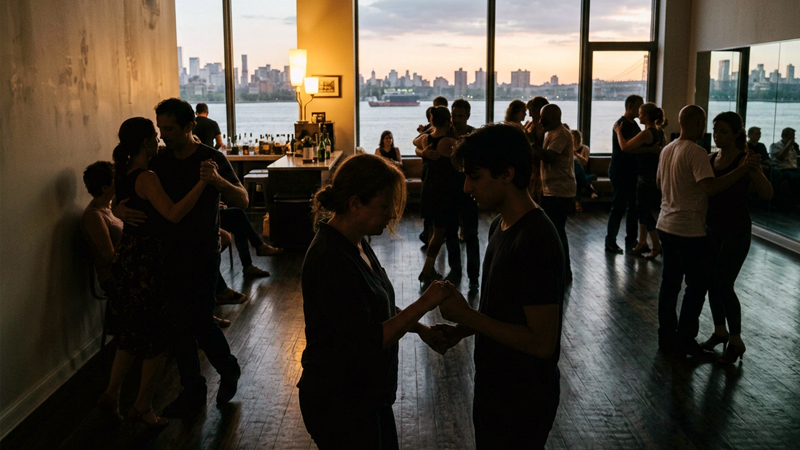
It took me a minute to enter the dance studio on the second floor. The huge windows extending from the high ceiling to the floor brought the beautiful view of the Hudson River inside. There were 3-4 people in the place, wearing white shirts and black pants, clearly dancers from their athletic appearance. The studio was quite crowded. Groups of men and women had gathered around tables, near the reception, and some in front of the coffee bar at the back.

Everyone's attention turned to the two couples who came onto the floor at that moment. A magnificent tango melody rising from the powerful speakers filled my ears that had just been throbbing from the anger crisis.

Once I had watched my aunt add hot, plenty of syrup to a forgotten plate of dry kadayif in the cupboard, miraculously bringing the dried pastry back to an edible state. At that moment, something in me was also saved from going to waste! The murmuring conversations slowed down and the couples in the middle began to dance slowly and unassumingly. While watching these beautiful people who focused only on their partners as if no one else existed on the polished dark wooden floor, I saw myself standing awkwardly in the huge mirrors. What was I doing here? I concluded that I should leave immediately. I was crying.

A male voice with a Russian accent behind me said, "No running away." I remember turning toward the voice and shyly saying, "I really don't know why I came," "My shoes are not suitable anyway," "I've never even shown any interest in tango in my life" and "Besides, I'm old now, dance can't be learned at this age, I really should go."

The young man standing in front of me with his hands extended and meaningful eyes told me smilingly that he only wanted 5 minutes from me. During this time, I would close my eyes and hold his hands; together we would do right, left, forward and back. That was it. If I wished, we could even try it right where we were, almost at the threshold of the door. And he completed his words with that famous sentence that I would never be able to escape hearing again: "If you haven't forgotten how to walk, you can tango too."

And my tango journey began that day.

I started reading to understand the characteristics of Argentine tango. I learned that it is a dance based on strong communication between partners, with improvisation at its core. I started listening to tango constantly. The bandoneón especially affected me a lot.

Then the Turkish tangos I listened to as a child came to mind. And I learned that the tango movement that started in the 1900s became one of the genres that adapted most quickly to the musical identity of modern Turkey during this period with the proclamation of the Republic. I had the chance to meet Metin Yazır, one of those who lit the fuse of this movement by returning to the country in 1997 and founding the first tango communities in Istanbul, in New York in 2023. We even have a short tango moment together in the group class I attended. Thus, today Istanbul; after Buenos Aires, it has become the most important tango center in the world where the most milongas are organized and hosts international festivals.

Convinced that it was time to experience Buenos Aires and Istanbul milongas in 2023, I attended two magnificent festivals in two cities. Now I was a "Tanguera" too.

Before ending the story of tango, which is a milestone in my life, I would like to also share the story of a piece that I am sure is 100% in all of your memories.

In 1916, 18-year-old architecture student Gerardo Matos Rodríguez composes a march for the student carnival in Montevideo. He has no music education; he plays the melody on the piano with a single finger for his friends to listen. The famous orchestra conductor Roberto Firpo, with whom he shares the composition, develops the melody with a tango rhythm, and the piece is first played at La Giralda in Montevideo. The young composer sells the rights to this work, which will become world-famous in the future, for only 20 pesos because he needs money.

A while later, the forgotten La Cumparsita becomes world-famous overnight when it is sung in its new form by Carlos Gardel, considered the god of tango, in 1924. Matos Rodríguez learns in Paris that his own composition is traveling the world and that he is not getting any share from it. Moreover, the lyrics by Pascual Contursi and Enrique Maroni were written without permission. The lawsuit that lasted for years to regain his rights concludes in 1948, shortly before his death, and a large portion of the royalty income is left to the composer's heirs. Half a century later, in 1998, Uruguay declares La Cumparsita as the country's cultural and popular anthem.

Milongas around the world close with La Cumparsita. In Turkey, it has settled as the first dance music at weddings.

It must be one of the little jokes the universe sends that my savior tango makes me experience marriage and divorce with every La Cumparsita. At milongas, when the last signal comes, I listen for now, having taken off my tango shoes, without anyone's eyes meeting mine. One day I will dance unprepared, without thinking, as it comes from within me. That day the dilemma with La Cumparsita will also be resolved.

Comments (0)
Another Istanbul - Zeyrek with its historical texture

While my eyes were scanning around, wondering what to photograph today. The street vendors caught my attention. I examined them but couldn't form the photo in my mind. I wandered a bit more but couldn't find any moment that told a story. As I started walking toward Küçükpazar and was making plans in my mind about photo compositions spinning around, ensuring that the tails of 40 foxes wouldn't touch each other, I greeted familiar people around, asked after their health, and continued on my way.

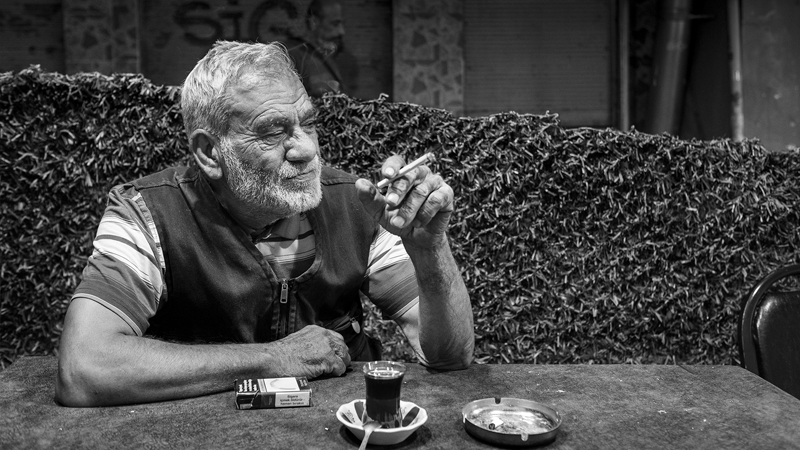
I was looking at people, and each one's facial expression, way of walking, and speaking began to draw my attention more and more. I wondered what stories they might have. I needed to sit somewhere and make a plan. I sat in one of the coffee houses on my way and ordered a tea. After taking the first sip, I greeted Ali abi, whose photo you see, sitting to my left.

He took a deep drag from his cigarette and started his words with -what can you do here-.

As he spoke, I began to listen to him, and I even got up from my place and sat at his table. His tea was finished, and without him noticing, I ordered him a tea. He was talking about parental love and filial respect.

He was mostly complaining about the current young generation. He paused for a moment, lit another cigarette, and fixing his eyes on the distance, spoke of labor and sweat. -I've passed seventy, I've done many jobs, and now I work in markets too- he said, taking another drag from his cigarette. He reminded me of the line from Ahmed Arif's poem "We Are Not Alone": **the first breath arrives like Hızır, the cigarette wrapped in Cibali…**

He was so right in what he told. He has lived, seen, experienced, and continues to live. -Nobody likes any job- he continued. He addressed the new generation he complained about:

- You are raw, get cooked, then gain experience, then become a master, then seek the rights of your labor, neither eat anyone's rights nor let your rights be eaten-.

Was he wrong in what he said? I don't think so…

Comments (0)
Two Cities One Woman

It hadn't been long since she came. Still, chatting with the gentleman at the bakery she stopped by on her way back from morning walks seemed ideal for the "new habits list." The only shop open at those hours was the coffee house. Since he had just brewed the tea, he usually offered coffee instead. He didn't let it pass, he was literally watching the road not to miss her. Because he was curious about who she was and why she was here… She wouldn't want to drink tea at such an early hour, but the simits coming from the neighbor across from the coffee didn't go without tea. A plain coffee before returning home was the polish on her mind opened throughout the walk. The hot simit she ate on top didn't just feed her stomach. Enjoying that narrow cobblestone street before the footsteps started felt good. Her chats with the coffee maker and baker were a bonus to her pleasure. Soon the grocer and other shops would open one by one. The hardware store was the latest to open its shutters. It had been five weeks since she came. She hadn't been able to complete the house's deficiencies yet, but they shouldn't be that important to mind, she didn't care about deficiencies as much as before... At the hours when everyone left for work or school, she enjoyed returning home, for once. She could enjoy this for a while longer.

"Did you write your new article?" asked the baker. He had become a keen follower since the day she said she wrote a blog. "I did. I'll upload it when I get home, you can read it. Actually, let me slowly get up…" as she said this, the baker, noticing she put her hand in her pocket to pay, stopped her with his hand. "Oh my girl, what did you do? The teas are from Ali, the simits are from me. The wonderful conversation was from you too. You'd make us indebted, don't do it…" he smiled. "The hardware store didn't open again. His wife got sick again. Between hospital and all, the man is miserable. Write down the deficiencies, I'll get them from him when he comes. You can pick them up from me tomorrow morning when you pass by." he said. It was impossible not to be grateful for this wonderful offer. The list was ready. She took it out of her pocket and handed it to the man. "Thank you, it's much appreciated." she said with an embarrassed air. Her stomach was full. The first coffee of the day was drunk, conversation was had, her mind was emptied. All that was left was to return home and share what she wrote. The rest, later…

THE CONTROVERSIAL GEM: HUMAN (The Flawed Gem of a Perfect Journey)

If you think you are late when others speed up, and that you took the wrong path when you changed direction, you can say "alas" but no one hears this call. Because you are not the only passenger on this journey called life. You are the one who will walk your own path. You are the one at the wheel, and the one in the passenger seat… Even the conductor is you…

Who are you?

Human...

What was human?

New road, new life… Time makes you forget everything, waking up in a new place… Even if it doesn't forget, it's certain you won't remember often. From philosophical, biological and psychological perspectives; the only being trying to make sense of itself and the universe. A helpless being who needs many things for this and has to cope with many things…

The word human, linguistically, has a direct root connection with the concepts of nisyan (forgetting) and ünsiyet (familiarity).

Nisyan, meaning forgetting; at the conceptual level represents human's flawed relationship with time and its own mind. Not just a simple memory loss, but an existential state.

Ünsiyet means getting used to and establishing bonds; conceptually it expresses human's potential to overcome loneliness, establish relationships with the other, and adapt to the environment.

Nisyan and ünsiyet, forgetting and bonding, are the two fundamental psychological and existential mechanisms that make a human human. Human relationships are like a building's foundation and windows; one protects the human inward, the other opens to the outside world. Nisyan is perhaps forgetting the excess burdens on our backs in the luggage on this worldly journey. Ünsiyet is meeting eyes with other passengers we don't know at the rest stops along the way and having a warm glass of tea.

How strange it is that a human; knowing everything but choosing to forget, symbolizing coming to a world to remember later, always needs that knowledge it knows but has forgotten by name. This is why love exists. It whispers to you that what you need is only in you to cope with things. To cope with yourself and everything else, it says to you "love yourself and know yourself!"

Knowing and loving… It doesn't matter which one you put first. You must live the unity of knowing and loving, loving and knowing, and build your life accordingly. And you must start this by loving yourself and knowing yourself. This loving is not like loving cheese, and knowing is not like knowing how to walk. You must understand the Arkhe of the matter.

What was Arkhe?

In ancient Greek philosophy, it means "beginning", "first cause" and "primary substance"; the concept believed to be the substance underlying everything, from which the universe and everything derives.

...something probable is being mentioned. And let alone being exposed to that thing, just being introduced to it as a concept, we witness it doing this to us… So we change. More precisely, we transform.

What are those things? What are those things?

Ancient Greek philosophers also wondered about this first departure point of the existential journey, that is, its first map, and proposed different substances for "Arkhe".

For example, Thales said, "Arkhe is water." He argued that the foundation of everything is water due to life being moist and dependent on water. He's not entirely wrong. Especially in this heat… But it's not enough…

Not enough, so Anaximenes said, "Arkhe is air." He defended air as the element that can explain everything through the relationship between breath and substance. Well, he's not wrong either. Imagine not being able to breathe…

Then Anaximander came and said, "Arkhe is Apeiron." If you ask what that is; the unlimited, indefinite and infinite primary substance… An open-ended statement. Think and think, can you get out of it if you can.

Fortunately, Heraclitus came to our rescue and said, "Arkhe is fire." You know that fire, in many disciplines, represents not only the destroyer but also the spark needed for re-existence afterward. So fire is the symbol of constant change and becoming in the universe.

Let's come to the main point; the thing that all these will manifest themselves in, prove their existence. Here Empedocles enters and says, "Arkhe is four fundamental elements: water, air, earth and fire." Four elements is also my favorite.

By the way, there is also Democritus talking about this. Although he says, "Arkhe is the atom, the indivisible smallest building block," I continue my path with the four elements. I leave splitting the atom to scientists.

When Empedocles combined the arguments of other philosophers and put forward the idea of multiple Arkhe, and said "earth, air, water, fire, these are the four roots," he actually planted a seed in the world of knowledge. According to his 'Four Element Theory' he developed, "These elements do not disappear or transform into a new element…" he strengthened his argument by saying. There is one more defense of Empedocles that I admire: According to him, the force that brings elements together is Love, and the force that separates them is Hatred…

According to me too, love is the most necessary action and hatred is an extraordinarily unnecessary emotion…

This theory is the first step of the idea that substances are composed of elements. Aristotle's element properties, today's states of matter - that is, solid, liquid, gas and plasma (which I haven't fully figured out) form the basis of the theory.

Let's come to the fifth element... In ancient times, to explain the sky and stars, they wanted to add this knowledge to the list as if it were a gem. This concept that Aristotle brought to philosophy; Ether, known as 'Esir'… According to ancient Greek philosophy, the fifth element beyond the four elements on earth; forming the sky and the divine realm, 'Quinta Essentia'… This concept was used to explain the perfect, unchanging structure of the sky, stars and planets while the earth constantly changes.

Or, as said in Cem Yılmaz's film, the fifth element is never a board. But now that I think about it... There must have been those who asked, just like me, 'Could the fifth element be human?' Because human could be a wonderful gem created for this world. But in this case, shouldn't human be unchanging, not transforming into something else? I think this is the condition for something to be 'Arkhe'.

As a being, human is variable and cannot be Arkhe, but as a concept we can say it is unchanging. Think about it, since the first day you too will see the unchangingness of human. You will say, "If it changed, it wouldn't be human." Without diving too deep, I want to close the matter here. I believe that those who will talk and discuss these matters need knowledge and love. I certainly have love, but I cannot claim to have enough knowledge. For now, my journey continues. That's why I am silent here. Otherwise, we might have to leave the stage to hatred. By hatred, I mean as a concept… Like debating… I know that where there is incomplete knowledge, there will be those who want to complete it, as well as those who do not accept that knowledge and want to change it. And the debate will begin…

What was debating?

As a concept, debating; was focusing on the fundamental definition, meaning and boundaries of a subject, leaving aside its daily or temporary details. This process is about examining the mental and theoretical background rather than the event itself, and deciphering what words and ideas mean. It refers to going to the essence to address abstract ideas behind events or situations, not the events themselves. It helps draw boundaries to clarify what a word or idea includes and does not include. It checks whether we derive different meanings from the same word. In fact, it prevents disagreements by preventing people from talking differently about the same subject. It breaks down complex problems into more understandable parts and clarifies thought. It provides a ground for the establishment of new theories and enables development.

Despite all this description, the daily perception of debate is very different. It involves fighting and conflict, a race to be right, personal attacks, relationship threats, and literally creates a win-lose situation.

So what method can be followed to break this perception? We can transform debate from being a fight into a map exchange between two travelers exploring two different geographies. For this, we must change our roadmap.

For example, I would first change my mindset at the start. The goal is not to be right along the way, but to find the truth at the end of the road. In short, to be happy… I would keep my curiosity, listen to my travel companion not to eliminate them, but to understand the view they see. The most dangerous curve is ego management. Instead of saying "You are on the wrong path," I would seek a common trail by saying "I look at this view from that hill." Controlling the urge to be right and anger is the most challenging for the parties in a debate. Be careful! In such situations, I have often fallen from right to wrong. I immediately rearrange my communication language, try to soften the environment and build bridges with questions.

As a result, debate should be seen not as a war but as a journey of discovery. That people experience differences of opinion is not a threat but an opportunity to get closer to the truth, I think. To summarize, a real debate is one where both parties return from a journey having learned something new.

By the way, how did we get to this topic, do you remember? From that emotion that turns a debate into a fight; that is, from hatred… Now let me quickly wrap up the topic and close it, and let's disperse without incident. After all, we are human and we have worldly affairs, it's late…

Human is like a small copy of this universal journey. Just as earth, air, water and fire form the world; nisyan and ünsiyet are the spiritual elements of human. Empedocles says the force that brings elements together is Love, and the force that separates them is Hatred. Human is exactly this: While establishing ünsiyet, that is, connecting with other souls through love, reveals that unifying force on the path. But when it gets caught in the vortex of nisyan; forgets its words, values and essence, that's when the elements separate from each other and a spiritual scattering, deviating from the route begins. Perhaps being human; is the fifth element itself oscillating between scattering on the roads with our forgetting side and reuniting at the same stop with our love-bonding side. Or is human a flawed part of that perfect gem?

May your path be open, your love eternal. Good night and I wish you good journeys in life.

..............

As the text flowed on the screen, she pressed the "Publish" button. With the familiar confirmation window that appeared, she took a deep breath and slowly lowered the lid of her laptop.

The silence of the countryside that suddenly filled the room gently wrapped the philosophical confusion that had just spilled from the keyboard. She relaxed in her seat and looked out the window. Leaning her forehead against the cool glass, she looked at the green and the pale colors of the sky covering it. "It's going to rain again…" she thought. Here, there were no egos, neon lights or fights to be right of the noisy metropolis she left behind. There was only the perfect harmony of the elements within themselves. Even though the deficiency list was still in the baker's pocket and the village house was not yet complete, her soul was more complete than it had been in a long time.

Looking at her reflection in the window, she whispered: "Maybe the fifth element is here. In forgetting and starting anew..."


Comments (0)

While Touring Adana and Its Surroundings

Through Begüm's Eyes and Words

Through Begüm's Eyes

Hello, Adana a little more, it's not easy, there are 2 years of lived experience and this is Adana, see, hear and live something new every day. We toured, ate and drank in Adana, now let's go a little outside Adana, for example Tarsus.

I had seen Tarsus in a TV series many years ago, restored houses and a very beautiful street and square. Of course, it wouldn't be possible without going to Tarsus while living in Adana, and since social media follows where you are, all information about there immediately falls before you. We went to Tarsus many times, we wanted to take every guest who came.

There is an American college in Tarsus, I don't know if you know? It was founded in 1888 by missionaries under the name St. Paul's Institute, being the hometown of Tarsuslu Saint Paul (St. Paul) in Christian faith made the region a center of attraction for American Protestant missionaries, and Tarsus has a very important place in Christian history.

Therefore, Tarsus hosts many historical artifacts.

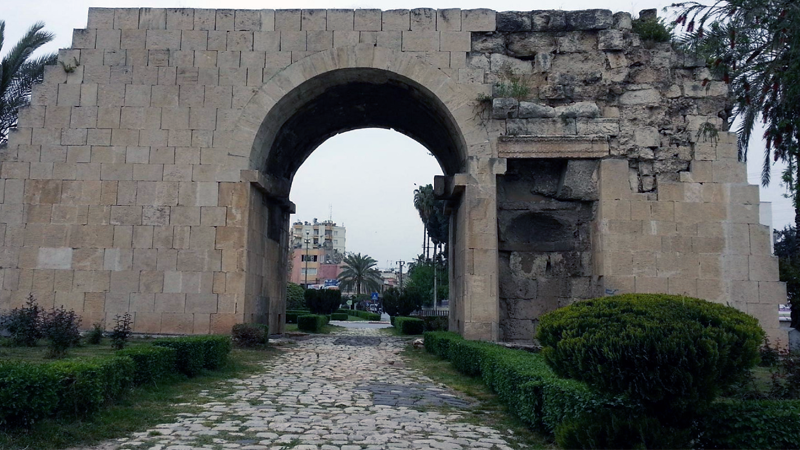
You start touring Tarsus by entering through the Cleopatra Gate, and at the entrance there is a map that tells you the route to tour in order and on foot, I think this is a very nice work.

Then St. Paul's Church, a church in a beautifully restored garden, if you are tired, rest a bit under the trees in its garden, then Tarsus Grand Mosque with a clock tower, you can sit and rest in its garden and drink kaynar or your special coffee.

Exit the mosque and turn left, you are greeted by the restored Kırkkaşık Bedesten, inside are shops selling souvenirs, all owned by women, this is very nice, the tradespeople who greet you with a smiling face and offer you warm treats.

We toured the bazaar, now let's continue touring and old Tarsus houses, some of the houses are restored and have become hotels, others continue to be restored but most are in a bit of a bad state, I hope all are restored and a very beautiful old Tarsus emerges.

There is a square I saw in the series, sit there and feel as if you are in ancient Rome.

Let's continue walking and St. Paul's Well appears in a garden, entrance is museum card or paid, the water is said to be healing, the garden is beautiful and you can see the old remains on the lower ground through the glass surface.

From here we walk again toward the center and see the ancient Roman road, it's fenced off, we had a hard time finding it, actually it's a short road among the ruins right in the middle of the city.

Also one of the important places of the city, Makam-ı Danyal Mosque, this is a mosque built next to the tomb of Prophet Daniel, during the excavations for an additional structure, Roman period structures emerged, they were protected by building a glass terrace over them and you can tour here, and the Mosque is still in use.

Let's say this much for now, let it not be too long to read, because we haven't gotten to the food topic in Tarsus yet, let's leave that for next month.

Comments (0)

Plastic Bracelets

Those Looking in the Same Direction

Those Looking in the Same Direction

The little girl looked at the world with childhood innocence. Her tiny heart beat with joy at the tales her grandfather told; she adorned herself with the colorful plastic bracelets and rings he brought, and added joy to her joy with the sound of the whistling rooster candies. Even though the chickpea powder that went down her windpipe caused coughing fits, she then burst into laughter as if nothing had happened. She had no thought other than play.

When she reached school age, she began to notice some things. Everyone's mother and father came to school, talked to the teachers, brought and picked up their children. Her companion was always her grandfather. The concepts of mother and father were foreign to her. She saw them only during summer holidays, briefly. Her little heart was consoled by gifts sent from abroad. Or the chocolates, toys and clothes they brought when they came on leave were enough to make her happy.

As the years passed and she grew up, gifts no longer excited her as much. Unfillable voids had formed in her little heart. As her sharing with friends increased, a bitter longing that appeared within her made itself felt. Feelings of love and trust were waiting hungry inside her. Jealousy and anger had long since reached satiety… Work life matured her even more. As she became more conscious, she began to question herself: "Who am I? Where am I?" She was constantly making comparisons in her mind, but she realized these were just mind games. Without giving up, she sought solutions, believed she would find a way out. As she began to face her mistakes and make peace with them, to show compassion to herself, her pain diminished.

That bitter longing inside her was replaced by a deep awakening. She had seen by living how even the deepest wounds eventually scabbed over, how the greatest resentments were left behind. Every little smile she created on people's faces became a root she planted in her own soul. Now when she looked back, there was not fear in that little girl's eyes, but a serene acceptance. Because she knew; sometimes a person sprouts from where they are most broken, and truly feels safe as they embrace their own heart.

Of course… At that moment, she took the hands of that little girl inside her and whispered to the depths of her soul: "You are very precious in every state of yours and you are now completely safe."

Comments (0)

Ferries, Piers

Voices, Faces, Streets

Voices, Faces, Streets

Understanding the value when lost, longing, and when you understand and long, not being able to reach. It is a long story of my Istanbul's ferries and piers extending to Şirket-i Hayriye, Turkish Maritime Enterprises and City Lines.

It will be a bit like telling a tale, but since I didn't experience it, I decided to first express what I heard, then what I experienced. According to what my elders told, Şirket-i Hayriye was a pioneering company with the feature of being the first joint-stock company established with the approval of Abdülmecid in the early 1850s. One of its reasons was that it applied the double-entry bookkeeping system in its accounting. Dear readers, as someone practicing the accounting profession, I will not explain the double-entry bookkeeping system to you, don't worry. Şirket-i Hayriye was purchased by the State in 1945 and transferred to City Lines. Although it currently operates as City Lines, Turkish Maritime Enterprises has intervened in between.

What was Şirket-i Hayriye's mission? To connect the Bosphorus and Istanbul in the Istanbul of that time. When you think about the current situation, doesn't it seem so absurd? Imagine, there was no Bosphorus land road from Sarıyer to Beşiktaş. A very clever move was made and the people living on the Bosphorus embraced the center of Istanbul via the sea route. At that time, each ferry had a number. 48 of these ferries were side-wheelers. As Sezen Aksu also voiced in her song, it is also a fact that among the ferries going to the island, there were side-wheelers.

The ferries operating on the Bosphorus were called beggar ferries. They would depart from the Galata Bridge in zigzags and reach Beykoz in three hours. Various dialogues had formed among the people about this:

While getting on the ferry from the bridge, the old woman asks the porter:

- "Dear son, this isn't the beggar ferry, is it?"

- "No, ma'am granny, straight to Kandilli!"

- The woman who went to visit her daughter in Beykoz grumbles: "I've been on the sea for a full three hours, it's a beggar ferry, the only thing we haven't done is beg at the piers of the rich mansions!"

- The bride complains about her mother-in-law: "Madam beggar ferry. Once it goes out on the street, it doesn't return home without knocking on the door knockers of forty doors!"

The first ferry I met in my childhood was Kanlıca. It was going to make its first voyage with guests, and we were going to be one of those guests. We were, but it was a sad union. Because I had left my bucket and shovel on the ferry. Since then, whenever I board this ferry, I have always remembered my bucket and shovel.

In my youth, ferries and piers were like important assets of the people living in Istanbul. Each ferry and each pier contained separate stories, separate lived experiences. The regular passengers of especially the morning and evening ferries would generally be the same people, they would bond over time, and they would have deep conversations either on the morning or evening voyages. It was readable from their eyes that they were almost waiting for that moment to come every day.

There was also a class distinction as luxury, 1st and 2nd class until the early 1980s. Luxury class would be on the entrance floor and stern of the ferry. It was furnished with furniture consisting of four chairs and a table. Since space was limited, passengers who didn't know each other could sit at the same table. Sometimes there were those who greeted each other, sometimes chatted, sometimes even experienced loves that led to marriages. When you looked inside, you would understand that this class consisted of a stratum with better financial means. How would you know? From the fact that they paid extra for the luxury class. After the ferry departed, the ticket collector would enter the luxury class, issue tickets and collect money.

The difference between 1st and 2nd class was understood from the seating. The 1st class was understood from the sponge covered with leatherette, the 2nd class from wooden seats… All class differences were abolished in the early 1980s. The only thing without difference between classes was that smoking, the status symbol of the past, was allowed. For some reason, no one complained about the smoke back then. It was treated as if it were normal, young and old were exposed to that smoke…

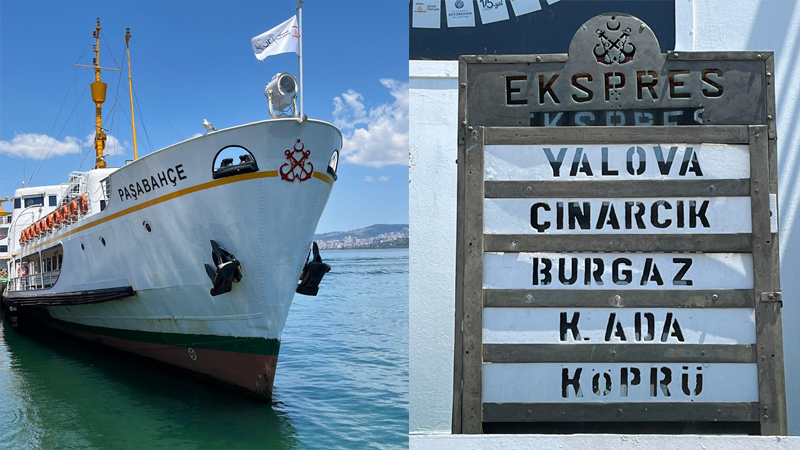
Today, we have very few ferries that can come from the past to the present. Of the ferries called express back then, Dolmabahçe, Fenerbahçe and Paşabahçe, only Paşabahçe is standing and in working condition. Dolmabahçe was dismantled and scrapped in Aliağa in 1994, and Fenerbahçe is displayed in the Rahmi Koç Museum. It would be possible to recognize these ferries I mentioned without reading their names by looking at their funnels. They had larger and rounder funnels than other ferries. Due to their speed, they would work on the Islands, Yalova and Çınarcık routes.

If I name the ferries that left a mark in the past; Suvat, Ülev, Turan Emeksiz, İhsan Kalmaz and of course Kanlıca…

Our car ferries, now called ferries, are our values that still carry Istanbul's burden. Before the first bridge was built, there were two routes connecting the two sides. For private vehicles Kabataş-Üsküdar, for buses and trucks Sirkeci-Harem. For those living on the European Side and wanting to go to a place on the Anatolian Side or vice versa, the ordeal would start from the beginning.

The routes of the ferries would be indicated as in the photograph at the beginning of my article, often causing one to question whether it was correct. Because it's human hand after all, what if the official didn't change it?

As for the piers; although we said goodbye to ferries that completed their lives, the piers still serve, even if not the same. Among these, the piers of the most used Karaköy-Kadıköy and Karaköy-Haydarpaşa routes were. After the morning hours, this route would make joint voyages as Karaköy-Haydarpaşa-Kadıköy until the evening working hours. Now Haydarpaşa is out of commission and the route now operates as a ring voyage Kadıköy-Karaköy-Eminönü… In the times when Haydarpaşa was active, its mission carried both a different, romantic spirit, and one containing many bitter and sweet memories. Bewildered people with wooden suitcases, those who came to do their military service, newly appointed teachers, the Istanbul public accustomed to the hustle and bustle of the city. All together, a mixed bag.

The old Galata Bridge also hosted ferries on its floats, swaying back and forth. Later, when the bridge could no longer carry its burden, ferries were not allowed to dock either. In fact, as a result of a fire that broke out in a restaurant, it completed its life, saddening our hearts, leaving us to live with our memories.

I am sure Istanbul has many more piers, ferries and loves that witnessed them to tell about. In our remaining life, with the wish that we live all the beauties we couldn't live, and live every single thing of Istanbul that we forgot to live, or couldn't see, couldn't discover…

Comments (0)

I Won't Give Up

The Ring of Words

The Ring of Words

If Istanbul had a voice, what kind of voice would it be?

The first thing that comes to my mind is the sound of seagulls.

I breathe in the scent of Istanbul. The smell of seaweed…

Imagine a nine-year-old girl. She came from Ankara. She is meeting the sea for the first time. She looks at the sea and breathes in the smell of seaweed.

Maybe my bond with Istanbul began at that very moment.

Istanbul is a generous city. Hospitable. It seems like it will accept everyone who comes. But suddenly it makes you feel its own identity; it scatters and throws away what it doesn't want. It is a brave city.

I love you very much.

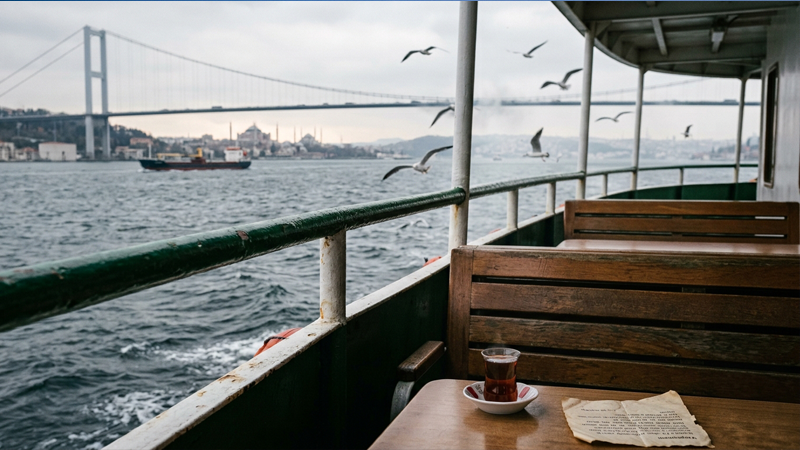
Walking on the Bosphorus that connects two continents, the ferry pleasure… I love the eating adventure it leaves me by tearing the warm simit with my hands and sipping tea alongside.

If you weren't this generous, would there be this much richness?

Your history… Your geographical location… Your value on earth… The civilizations established… The countries, people, lives you witnessed…

All accumulated in you.

I love your stance that puts people in their place, your shaking off and throwing away everything you don't accept, your proud identity.

I thank you for everything you taught me.


From my age of nine to this age, you opened your arms to me.

And I never gave up loving you.

I love your voice, your smell, your image, your touch very much.

And I know;

I won't give up loving you.

Comments (0)

Happiness

The Spirit of the Times

The Spirit of the Times

Is happiness, feeling happy, an imposition of our age? Because there is a delusion in humankind that everything in the world, even in the universe, seems to exist to serve human happiness. Other living beings don't live for this, but humans should always be happy... However, many people may not even be able to define happiness in their own way.

There can definitely be as many happiness recipes as there are people.

Really, which moments of life can be a source of happiness?


That first moment when a baby sucks its mother's breast...

Waking up in your comfortable bed with the faint melodies of the piano coming from downstairs, passing through the neighbor's ceiling...

Walking, making progress on a road where trees almost form a passage...

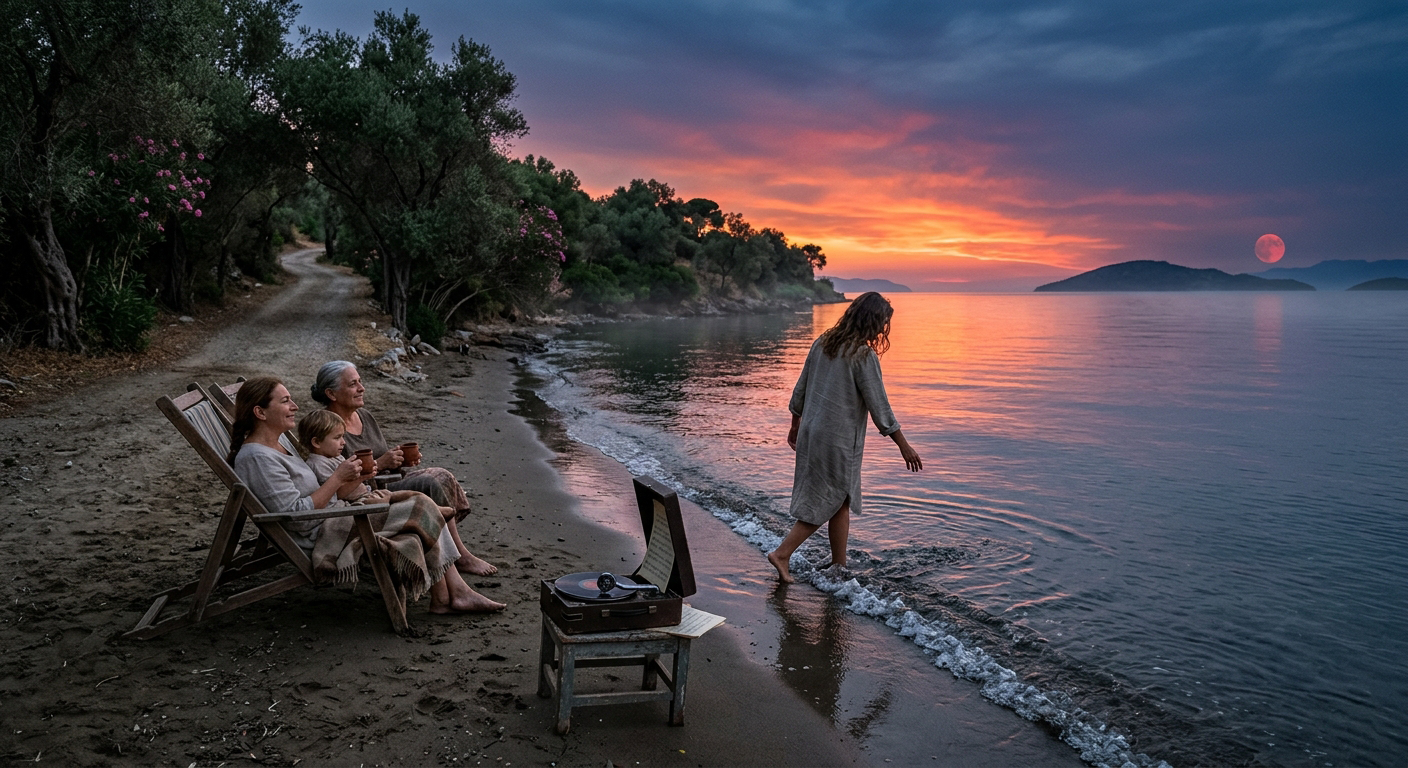
Feeling the smell of the sea in your lungs as the sun sets from where it is, with damp warm sand under your feet...

On a summer evening, you are on a sunbed on the sand with a glass in your hand; a crimson moon rises like a fire in the middle of the sea...

You are by the sea; the sea is calm like a lake, that magnificent light from the sky has hit the sea and is reflecting. Next to you, there is someone you share this moment with, to whom you say "What a beautiful moment!", whom you love very much; your friend, your child, your family...

You are advancing by stroking the waters, the salty water stings your nose, you hear your breath; you are mixed into the sea...

You are walking outside when everywhere is covered with snow, breathing with the magnificent cleanliness of the air; the silence of snowy weather all around...

Could these be a few moments of happiness?

Comments (0)
ce

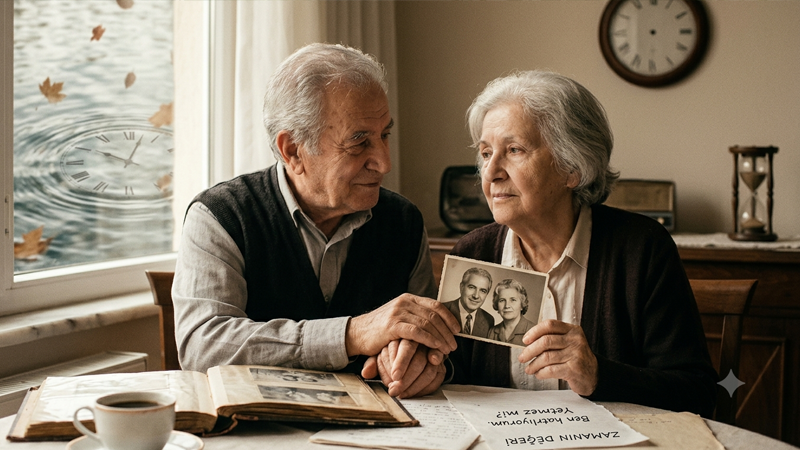
You must have come across different versions of it somewhere, or maybe you have experienced it; the elderly man never gives up talking to his Alzheimer's-stricken wife, doing the things she "used to" love together, sparing time for her. A witness to all this says "..why" "she doesn't remember that you are her husband, or even your name.. she will forget what you did today in a moment.." the man replies "I remember. I know she is my wife and I love her. Isn't that enough?" I don't know if this is sustainable in real life. To be able to continue talking, sparing time not because you have to but because you love even though she doesn't remember, can't make sense of it...

I bow with respect before those precious people who can do this, sustain it. In the parent-child relationship, communication can become even more difficult, even seem unnecessary. You are a child, you have your job, spouse, children, your life flowing by. You find a place where they are safe, you follow their health, you take care of them or find someone to provide care. You do everything that can be done perfectly, but you don't even have a short time to talk to a parent who doesn't even remember your name, or this pains you and you stop talking. This is never something to be reproached or looked down upon. Whether out of love or obligation, if you take responsibility, you deserve a big thank you. How you use your time is at your disposal.

I extended the introduction, I am aware, let's get to the point; our topic is not Alzheimer's or communicating. Our topic is time. Not past time, future time, time that is medicine for pain, flowing like water or never passing. Your time; the time you decide how to spend or how to use. Let's say you met someone and you want them to be a part of your life. What do you do? Let's go back a bit; six months, six years, twenty-six years, 46 years, whenever you lived.. What did you do? You work, you try to leave work earlier. A cafe you hang out at to read a book, drink a coffee turns into a "place" you go to with them. A station, a stop, a central building/square becomes your meeting place, you don't need to pronounce the name of the place, you say "I'm at the place".

The neighborhood you met, the date have a special meaning for you. You create opportunities to see them more often and longer, so much so that you even set aside your favorite pursuits for a while. You take an interest in their work, pursuits, hobbies. You discover new places together. Before one meeting ends, you plan the next. You buy gifts, you make their life easier. Whatever good or bad happens to you, you immediately want to share it with them. Is your mother sick, is your house being demolished, did your sibling get into the department they wanted, did you get promoted, did you learn a very funny joke, did you play a prank on a friend.. you want to tell them first. Your day starts with them, ends with them. You do all this to keep the relationship going, to deepen it, or because you feel like it, because you love them, the relationship continues, deepens.

Let's say you founded a platform, collective, foundation or club to make money or for social responsibility, to open a space where people can express themselves, maybe for the need of people who are still lonely among this many crowds and possibilities to be seen, to be heard, in the final analysis the reason is not very important. You contact people to create and develop this formation, you support and labor for them to produce products, services, works. If even a single person feels better than before in this process, you become happy. Examples can be multiplied; strengthening your communication with your child, healing a wound in the body or soul, reading the book your friend wrote, visiting an artist, a professional who has achieved great things in their field, showing that they are not forgotten, honoring them.. You do all this by sparing from your time, the time you decide how to spend or how to use.

People spend effort, labor, money to see value and/or to show that they value. I think the most valuable thing that can be done to heal, develop, grow, honor something is to spare time for it. The most valuable gift you can give someone is your time spent with them. If I have been instrumental in making you stop and think about for whom, where, how you use your time, how happy I am.

With the wish that you spend your most valuable treasure on people and pursuits that make you feel good and add value to your life..

ce

Comments (0)

Ache

From Münire's Pen

From Münire's Pen

When I entered the street where the house was located, it was almost evening. How many years had it been since I left this city. Fifteen, twenty. I don't remember. The street had changed a lot. There is now a market where Nalbur Kemal's shop used to be. The bakery has become a cafe. My mother is a stubborn woman. After my father's death, she didn't give the house to the contractor. Only our house and grocer Hayri's house remained from the old ones. The window of the kitchen on the lower floor is open. The smell of frying comes. My mother's mixed fry. I close my eyes.

Between my father's shouting and my mother's sobs, I pull the door and leave the house. I am left on the street with a suitcase filled with some of my clothes and books. I spend the night at my friend Belma's house. I didn't go to my father's funeral. He had willed it, so that I wouldn't come. I lived abroad with this conscience ache at every moment. Now I load the blame on time and ring the doorbell...

Comments (0)
From Zülay

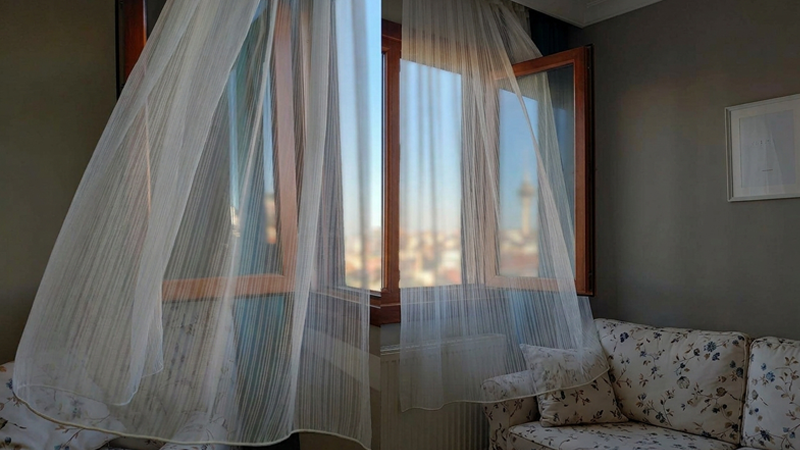
Everything looks so small from a distance… Doesn't it? People, houses, cars, objects… But most importantly, events. They seem so big when you are in them. Sometimes complex, sometimes rushed, sometimes easy, sometimes impossibly difficult…

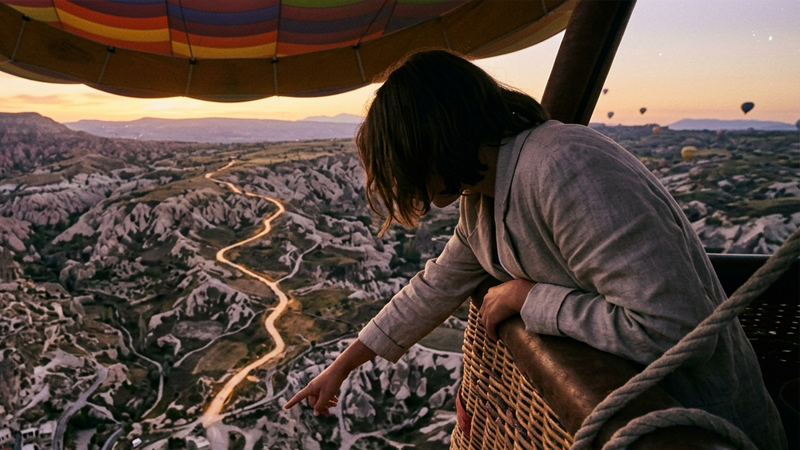
We get carried away by the flow of the event, get lost in the details, and while trying to catch up from one point to another, we cannot see the big picture. Whereas the solution is sometimes standing quietly in the middle of all this confusion. We just can't see it because we look at it too closely. When I realized this, I was in the sky.

I was in a balloon. As I rose, I saw how the things we magnified below became indistinct. Houses shrank, cars became small, people remained as small as dots. Streets, the roads we thought were huge while passing through them just moments ago, turned into thin lines when viewed from above. And at that moment I noticed something else: The roads were not disappearing. I just couldn't see all of the road while I was in it. Isn't life a bit like this too? While in an event, we only see where we are.

The obstacle in front of us, the wall beside us, the task we need to catch up on, the word we need to say… This can tire us. Whereas when we pull back a little, we realize there is a way out within all of this. Consider an argument. A single sentence said in the moment can seem like the most important matter in the world. Anger grows inside us, words become heavier. We want to respond immediately.

A few hours, even a few days later, when we look at the same sentence, we mostly think this: "Was it really worth upsetting myself this much for this?" Time is also a kind of distance. Perhaps reality settles into place as we move away.

This doesn't mean the things we experience are unimportant. On the contrary… It means measuring the event more accurately. Moving away is not escaping. Pulling back is not giving up. Sometimes pulling back is a small space we give ourselves to be able to look from a more correct place. Sometimes what we need in life is not a solution, but distance.

So then; May you have enough distance to see your path, enough patience to stay on the path, and enough companions to beautify your path.

Comments (0)
Sevim Yücel - Parallax

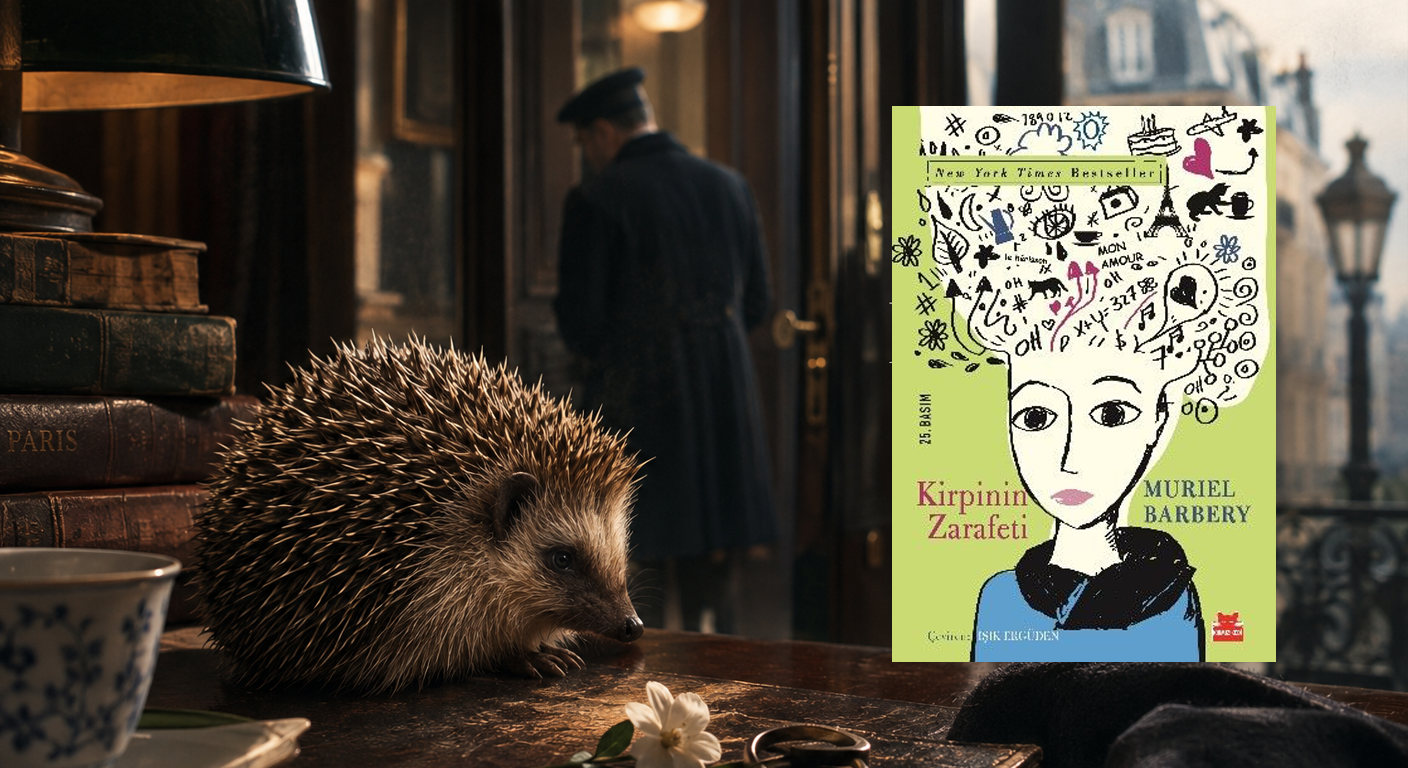
The character Renée in Muriel Barbery's book "The Elegance of the Hedgehog" works as a concierge in an apartment building in Paris where aristocrats live. She is quite outside the physically accepted understanding of beauty, and she herself is not a woman pleased with her body. This has been the case since her childhood. In fact, when she started primary school, the compassion her teacher showed her became one of the first things that affected her in her life.

When she learned to read, Renée opened another space for herself. She began to build the world she could not exist in visually by reading and learning. She cannot receive much education; after finishing primary school, she is taken out of school to help her family with housework and in the fields. But because she once met reading, she reads everything that comes her way. She goes to the library, examines books in different fields, and over time builds a great world for herself starting with literature. This interest later extends to other fields of art such as music, cinema, theater and painting. Although Renée seems like an ordinary concierge from the outside, in her own world she transforms into a true intellectual.

Another character living in the apartment is twelve-year-old "Paloma", the daughter of a father who has been a member of parliament and a minister. Despite her age, her intelligence and perception are extremely developed. The events around her, her family and school life seem meaningless and superficial to her. She questions the meaning of life, has a great interest in philosophy and experiences a deep loneliness. Therefore, she too chooses to be invisible, like Renée.

Renée, on the other hand, does not share her intellectual accumulation with anyone. She withdraws into her own world to avoid attracting people's attention. She doesn't talk much to people, she just does her job and tries not to attract attention with what she says or writes. In a sense, just like a hedgehog, she makes her spines a castle for herself.

In fact, there is a similar situation in our daily lives. When we go to a restaurant, we mostly don't look carefully at the waiter's face; when we get in a vehicle, we don't wonder who the driver is. We often identify people by the work they do. Renée is also just a concierge in the eyes of society. Whereas inside her, there is an extremely rich intellectual world that no one knows about.

The paths of Renée and Paloma begin to intersect at this point. One day Paloma sees a philosophy book that falls from Renée's shopping bag and notices that there is a contradiction between what she knows about her and what she sees. However, the real change begins when Japanese director Kakuro Ozu moves into the apartment.

When Ozu meets Renée, he realizes that a sentence she says is the first sentence of "Anna Karenina" and continues the sentence. Thus, Renée meets for the first time someone who can truly respond to her own world. Paloma also becomes the third part of this relationship.

The story of these three people who look at life from different angles is one of the most impressive aspects of the book. Because "The Elegance of the Hedgehog" reminds us that we should not look at people only by what we see from the outside. A person's appearance, age or the work they do is not enough to tell their inner world.

When I first picked up the book, that's why its title caught my attention: "The Elegance of the Hedgehog". At first glance, it seems like two words that we could never put side by side. Whereas we need not see life as only black and white, but be able to notice all the tones in between. Yes, a hedgehog also has elegance; and even a depth of elegance we could never guess at first glance.

"The Elegance of the Hedgehog" is a book that suggests looking at life from another angle. Although some parts are quite philosophical, it is a work worth reading for those who want to look at people and the world outside the usual.

The Elegance of the Hedgehog. Kırmızı Kedi Publishing. 320 pages.

Comments (0)

Key

The Story of Small Things (Essays on life's overlooked details)

The Story of Small Things

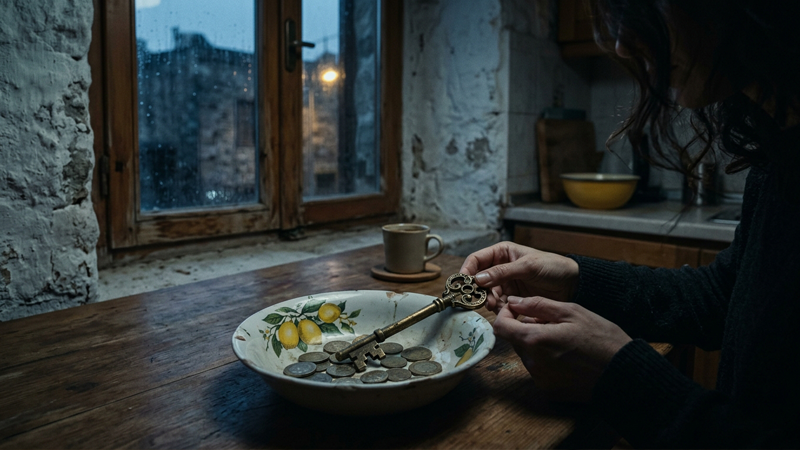
On the kitchen table of the two-story old stone house in one of the remote, narrow streets of Bodrum, that key was sitting. Inside the porcelain bowl with the lemon pattern inherited from her mother, among the coins. It was heavy. It was a key cast from brass, with a rough tip, complex teeth. On its handle, there was a curved pattern peculiar to old keys. The lines resembling thin branches were intertwining around the small oval hole in the middle.

The bowl seemed to have never moved from its place since her childhood. Meltem put the olive bags she bought from the market on the counter. She hung the yellow cloth in her hand on the edge of the sink. The tiredness of the day had settled on her thin shoulders. She wanted to make a coffee and rest a bit.

She put the cezve on the stove.

Since leaving Istanbul behind and returning to this house where she was born and raised, to the cold and familiar muteness of these stone walls, this was the first time she looked at the table this carefully. When she took refuge here after exhausting herself and cutting all her ties, she thought these thick lime-scented rooms would protect her. Whereas no matter where a person escapes to, they carry their fractures in their coat pocket.

As the coffee slowly swelled, a dark smell spread through the kitchen. Meltem's gaze shifted to the table.

The bowl.

The coins.

And the key standing among them.

The first week she returned, she had tried this key on all the locks in the house with a childish stubbornness, as if looking for something she had lost. The heavy steel lock of the entrance door, the wooden bolt opening to the back garden, the hatch in the attic, the rusty padlock in the storage…

It hadn't fit any of them.

The key did not belong to any of this house's locks; just as Meltem could no longer belong to that safe nest of her childhood, to those old peaceful days.

It didn't work.

In the end, she put it back where she took it from..

It had been there since that day.

In the first days, she wondered where it came from whenever she saw it. Maybe it was left from the first owners of the house. Maybe it was the key of a door that no longer exists, a thrown-away chest, a lock changed years ago. Maybe it was something much simpler. It had fallen from someone's pocket, been found and put away somewhere.

From one place to another. Finally to its current place. Meltem filled the coffee into the cup and went to the living room. She settled on the edge of the armchair in the corner. She put the cup on the small side table. Outside there was wind. Pink leaves torn from the bougainvillea were drifting on the stones, dried melissa branches were rubbing against each other. Evening was slowly descending over the garden. This season of Bodrum had an air that pulled a person into themselves, opened old accounts. She too was finding every disappointment she had escaped from, her father's absence, in this dim room made desolate anew.

The coffee in her hand had long since cooled. Her mind drifted to the kitchen again. Not just to the bowl. To the key. She got up. She reached out and took the key. It was cold.

The fine patina on it left a familiar metal smell on her fingers. While turning the key in her hand, she looked at its surface with the still attention peculiar to people searching for invisible traces behind old objects. There was no trace other than the pattern. Not a letter, number, scratch…

Nothing. Why would a person keep such a key? The humid air of late autumn was seeping in through the open window, filling the room by soaking into the wooden frames. This cool and heavy smell reminded her of the autumn her father died.

While emptying his jacket pockets and bedside drawers, she had found keys of various sizes strung on a cord, whose unknown locks they opened. Her father was a stern, taciturn man who always kept his emotions under lock and key. Perhaps that's why there was an invisible bond between him and keys. Those keys opened neither this house's door nor the drawers of the old shop in the town.

Yet she hadn't thrown them away. Meltem hadn't dwelt on this then. Because she hadn't found time to question her father's silences in the rush of life. Now, looking at the key in her hand, she thought of her father's keys. These were small pieces of metal from different times, unlike each other. Some had worn teeth, some had darkened handles. Her father had never explained why he kept them.

Maybe he too had long forgotten which doors they belonged to. Maybe those keys were precious not because they opened a place anymore, but simply because they were witnesses to that past they once protected. Her father had hidden in his drawers not the secrets behind the locks, but the youth he entered and exited through those doors.

Meltem squeezed the key a little tighter in her palm. Outside, the wind had picked up. The last blue light seeping through the window was hitting the porcelain bowl on the wooden table. As the first shadows of evening spread slowly over the rough plaster on the wall, she put the key back in its place, next to the coins.

A dry, solid metal sound echoed in the room. The other coins in the bowl jingled slightly, then the kitchen sank back into its deep silence. Outside, the street lamp lit with a yellow light. The light hit the opposite wall of the stone house and left a faint stain on the window glass. Meltem looked at the key in the bowl for a while longer. The metallic smell remaining on her fingertips, the rough teeth and the coldness of the darkened brass... The door it belonged to must have long been demolished, its lock changed, or remained under a pile of rubble. Yet the key seemed to be standing there as if it had outlived what it belonged to. With the dignified bearing of having once kept a place, a memory under lock and key...

Meltem reached out and turned off the light.

The key, and the old peace she sought in her father's house, remained in the darkness.

Comments (0)

To Be Continued: L I

Ways of Seeing

Ways of Seeing

CHAPTER 5: THE GUARDIAN'S SEAL

In the labyrinthine corridors of the Grand Bazaar, the roar the rain made on the old vaults echoed. The trace in Florence had dragged me here, to the heart of the ancient city. The collector's shop was in the most remote corner of the bazaar; it was as if frozen in time with its shelves, dusty windows and silverware.

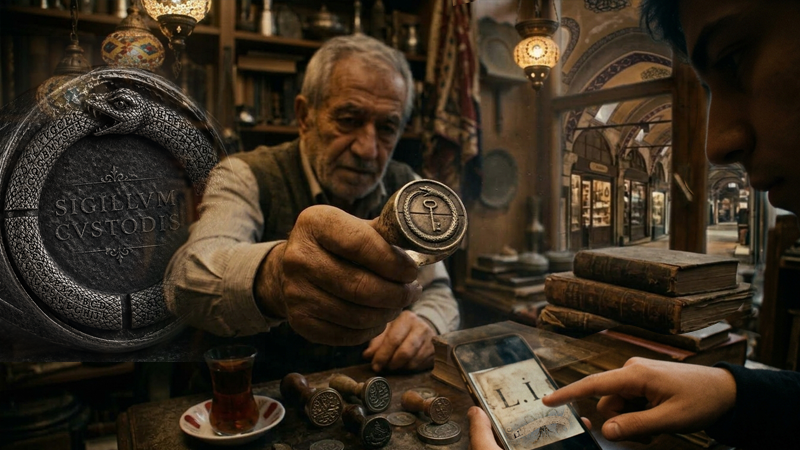
The old man sitting opposite me held the silver ring up to the light. He was speaking in a whisper: "...That night, the brothers delivered the trust to four walls. The fifth wall was never built..."

His voice seemed to carry the secret of centuries.

I looked at the seal on the ring he extended. The snake biting its own tail, that is Ouroboros, was divided into four equal parts. My mind went for a moment to that stranger I met on the ferry; that fleeting seal drawn with invisible ink... The seal on this ring was harder, more sovereign than that.

"Look carefully," said the collector, pointing with his finger at the faded letters. "Sigillum Custodis. The Guardian's Seal."

Snake and key... A passage hidden within an endless cycle. In 1204, when Constantinople was in flames with the Latin invasion, what had this community not been able to smuggle out of the city? Where had they hidden it, in plain sight of everyone but unreachable by anyone?

Magnificent structures like Hagia Sophia or Chora were too much in the public eye for this secret. The real mystery must have been hidden in the veins of the city.

"People look for Hagia Sophia. Whereas emperors hid their secrets not in Hagia Sophia, but in the Boukoleon Palace."

Boukoleon was the part of the Great Palace opening to the Marmara. The private harbor of the emperors was not used only for ceremonies; chests brought from state archives were also loaded directly onto ships from here at night. Although Anna Komnene does not directly mention Boukoleon in a section of her work Alexiad, she describes the private piers of the imperial palace opening to the sea in detail. The palace was not just a place to live; it was designed to be abandoned without being seen when necessary.

The collector continued, enlarging the photo on my phone:

"Look at the right vertical fold of the inscription band. These brown stains are not randomly formed cracks; they are the traces of old letters. Someone has scraped the text here with great meticulousness. They deliberately left only the letters 'L.I.', that is, this 'key monogram'."

While taking a sip of my tea, a shiver enveloped me. These letters could not just be the beginning of a motto. They did not point to a concept, but to a place.

"If this is an encryption key," I murmured, "L.I. could indicate a page number, a coordinate, or the order in which the seals are read."

Like Alpha and Omega, the monogram of Jesus; first and last... If the two letters in Florence are the beginning, in which dark corner of the world were the remaining three parts? Or more frighteningly, had these parts actually never left Istanbul?

As the collector put the ring back in its box, he looked into my eyes:

"The city opens its secret not only to those who know how to see it, but to those who dare to get lost in it."

Outside, the rain was not letting up. As the heavy iron gates of the Grand Bazaar were closing, I knew that my only clue was two letters and a four-part snake. L.I. was not just a beginning; it was the first step of a silence lasting for centuries. The trust was fragmented, the map distributed. Now someone was inviting me to a chessboard to reunite this dark heritage.

Whose move was I? Most importantly, which was the fifth wall?

To be continued...

Comments (0)

VOM VOMITORIUM

It is composed of a group of writers and art lovers who believe in the power of art and the role of culture in social change. Community members produce works focused on the human experience by combining their talents in literature, theater, music, painting and other art branches. The group, which has no commercial purpose, offers a platform that encourages artistic freedom while adhering to Republican values.

VOM VOMITORIUM aims to reach a wide audience with different events. It is a community that tries to create cultural and artistic richness both with its artistic productions and its social interactions.

The word VOMITORIUM was first used by the Roman writer Macrobius in the 4th century AD. This term was used to describe the passages that allowed spectators to exit their seats in amphitheaters quickly. Similarly, VOM aims to be a passage that enables art lovers to meet art quickly and effectively.